2026 Best Irrigation Systems for Global Buyers

Time:2026-09-30 Author:Aria
0%

Irrigation decisions now shape farm resilience, operating costs, and water security. FAO’s AQUASTAT data identifies agriculture as the world’s largest freshwater-withdrawing sector, accounting for roughly 70% of global withdrawals. That figure varies by region, but the pressure is clear. In a dry field, a leaking joint or poorly timed spray can waste water before crops benefit.

Selecting Effective Irrigation Systems means matching equipment to crops, soil, climate, and available water. Drip lines can deliver water close to roots, while sprinklers suit many field layouts and pivot systems cover large areas. Yet no method wins everywhere. The World Bank’s work on water management also emphasizes that better infrastructure must be paired with sound planning and efficient operation. Buyers should compare filtration needs, energy use, maintenance access, and local service support—not just purchase price.

Details matter. A sandy plot may need shorter, more frequent watering; a windy site can make sprinkler performance uneven. Sensors and automated controls can improve timing, but they do not replace field checks. Sometimes the simplest system is easier to maintain. And that matters.

This 2026 guide compares irrigation options for global buyers, including their practical strengths, limitations, and fit across different farm conditions. Reported efficiency claims deserve scrutiny: real results depend on installation, scheduling, and upkeep. A system can look excellent on paper and still disappoint in the field.
2026 Best Irrigation Systems for Global Buyers

Understanding Irrigation Systems and Their Role in Global Agriculture

For global buyers in 2026, understanding irrigation systems matters more than choosing the most expensive equipment. Irrigation moves water to crop roots with controlled timing and volume. It can support production during dry periods, but it cannot repair poor soil management. Water is not free.

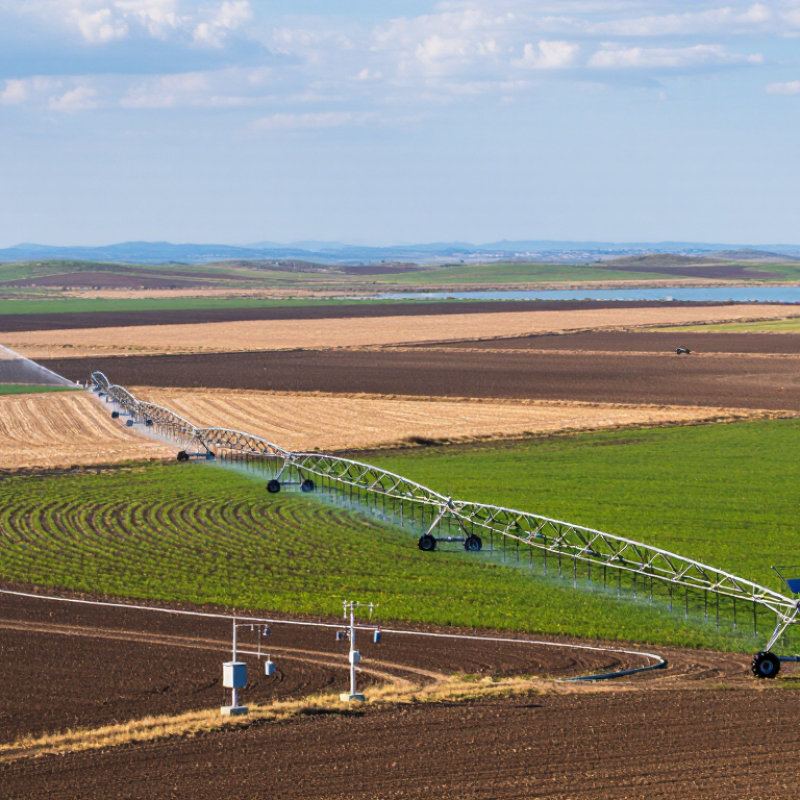
Drip irrigation delivers moisture near each plant through narrow lines and small emitters. It suits orchards, vegetables, greenhouses, and farms facing water limits. Sprinkler systems cover larger areas and work well for field crops, although wind can reduce accuracy. Center pivot systems serve broad, level fields with relatively consistent soil. Surface irrigation remains useful where labor, land shape, and water access make simpler equipment practical.

A reliable buying decision begins with a field assessment. Measure water quality, pressure, flow rate, soil texture, slope, and crop spacing. Salty water may block emitters over time. Uneven pressure can leave one row wet and another stressed. Local technicians should also check filters, valves, pumps, and replacement parts before installation. Conditions change.

Some buyers focus only on coverage and price. That approach often misses energy use, cleaning work, seasonal repairs, and operator training. A smaller system may perform better when maintenance resources are limited. I would not assume automation always improves farming; sensors need calibration, connectivity, and human judgment. A dry reading can reflect a faulty probe, not dry soil. Details matter.

2026 Best Irrigation Systems for Global Buyers

Understanding Irrigation Systems and Their Role in Global Agriculture

The chart compares typical field application efficiency by irrigation method. Higher efficiency means a greater share of applied water reaches the crop root zone, helping reduce water losses from evaporation, runoff, and deep percolation. Actual results depend on climate, soil, system design, maintenance, and farm management. Values are representative planning figures based on commonly used agricultural irrigation benchmarks.

Comparing Major Irrigation Technologies for Different Farming Needs

2026 Best Irrigation Systems for Global Buyers

Comparing Major Irrigation Technologies for Different Farming Needs

Choosing an irrigation system starts with soil, crop spacing, water quality, and field shape. In field assessments, drip irrigation performs well for vegetables, orchards, and high-value crops. It delivers water near the roots, reducing evaporation and leaf wetness. However, emitters can clog when filtration is weak. Regular flushing is essential.

Sprinkler systems suit uneven fields, pasture, and crops needing broader coverage. They are easier to adapt than fixed drip lines, but wind can distort the spray pattern. Center-pivot systems cover large, level fields efficiently. Their performance depends on reliable power, correct pressure, and careful wheel-track planning. In dry regions, energy costs may change the real return.

Surface irrigation remains practical where labor is available and water flows naturally across the field. It usually costs less to install, yet it may waste water on sloped or poorly leveled land. Subsurface drip can reduce surface evaporation, but repairs are harder because the lines are buried. I have seen excellent systems underperform because farmers ignored maintenance records and seasonal water tests. No technology is perfect. A sensible buyer should compare local technicians, spare-part access, filtration needs, and five-year operating costs before choosing equipment.

2026 Best Irrigation Systems for Global Buyers - Comparing Major Irrigation Technologies for Different Farming Needs

Irrigation Technology Typical Application Efficiency Best-Fit Crops and Uses Terrain and Field Fit Relative Initial Investment Energy and Labor Considerations Key Limitations
Drip irrigation About 90–95% under well-designed and managed conditions Vegetables, orchards, vineyards, row crops, and other high-value crops Works on level or sloping land; filtration and pressure control are important High Often low-to-moderate pumping demand; needs regular filter and emitter maintenance Emitters can clog; plastic lines require management and replacement; less suited to fields where equipment or tillage may damage lines
Subsurface drip irrigation About 90–95% under suitable design and management Row crops such as maize, cotton, and sugarcane, as well as some perennial crops Best in carefully mapped fields with suitable soils and reliable filtration High to very high Can reduce surface evaporation and allow mechanized field operations; locating leaks and repairing buried lines can require specialized tools Installation is costly; root intrusion, clogging, and uneven performance can be difficult to diagnose
Micro-sprinkler irrigation About 80–90%, depending on layout, wind, and management Orchards, nurseries, and crops that benefit from a wetted area larger than a drip emitter provides Suitable for many terrains; spacing and sprinkler placement must match crop and soil conditions Medium to high Moderate pressure and pumping needs; heads and filters need periodic inspection Wind and evaporation can reduce uniformity; wet foliage may increase disease risk for some crops
Center-pivot sprinkler About 80–90% with appropriate design and operation Large-scale field crops, including cereals, forage, and oilseeds Most effective on large, relatively regular fields; gentle slopes are generally manageable Medium to high Can be highly mechanized and require relatively little routine field labor; pumping energy depends on pressure, lift, and application equipment Leaves corners of square fields unirrigated unless additional equipment is used; wind, wheel tracks, and uneven water supply can affect performance
Linear-move sprinkler About 80–90% with suitable design and management Large rectangular fields planted to field crops or forage Designed for long, relatively level rectangular fields with a suitable water-supply arrangement High Mechanized operation can reduce labor; guidance and water-feed systems need reliable operation Field layout and water delivery requirements are more restrictive than for many other systems
Solid-set or portable sprinkler About 75–85%, depending on wind, pressure, and system layout Vegetables, pasture, seed crops, and fields needing flexible or seasonal coverage Adaptable to varied field shapes; portable systems can be moved between plots Low to medium for portable setups; medium to high for permanent solid-set systems Portable systems may need substantial labor for moving pipes; pressure requirements can increase pumping costs Wind can affect distribution; wet foliage and surface runoff may be concerns in some conditions
Surface irrigation: basin, border, or furrow About 50–70% in many conventional applications; higher performance is possible with good land leveling and management Rice basins, forage, and row crops such as cotton or maize where soils and water supply are suitable Generally best on gently sloping or level land; field grading and suitable soil infiltration are important Low to medium, though land shaping and conveyance works can add cost Low on-farm pressurization needs; labor and water-control demands can be high without improved gates or automation Can have higher conveyance and application losses; erosion, waterlogging, and uneven application are risks if poorly managed

Comparison note: Efficiency figures are indicative ranges for water applied at the field and vary with design, soil, climate, maintenance, and management. They are not guaranteed water savings. Relative investment levels are broad comparisons; local equipment, installation, energy, water, and labor costs differ by region.

Evaluating Water Efficiency, Automation, and Operating Costs

2026 Best Irrigation Systems for Global Buyers

Evaluating Water Efficiency, Automation, and Operating Costs

For global buyers, the best irrigation system is not always the most automated. It should match the soil, crop, climate, and local maintenance skills. Drip irrigation can reduce evaporation when lines are correctly spaced and pressure remains stable. In sandy soil, short watering cycles often prevent deep drainage. In heavy clay, slower application helps limit runoff. Field measurements matter more than catalog claims. Place a soil-moisture sensor near active roots, not beside a wet emitter. Check it by hand after rain. Sensors can drift.

Automation saves labor, but it does not remove responsibility. A controller can adjust schedules using weather and moisture data. Poor calibration may still water a field during a cool storm. Buyers should request manual override, offline operation, and clear alarm records. Solar power may suit remote sites, while unreliable grids require battery backup. Connectivity also varies sharply between regions. Test the system at the weakest signal point. Small details matter.

Operating cost includes more than electricity. Filters, replacement emitters, pump servicing, labor, and water fees shape the real budget. A low-price pump may consume more power for years. Compare seasonal energy use, not only purchase price. Ask for local spare parts and technician training. This is where many projections become optimistic. Even efficient systems lose performance when filters are ignored. Leave room for repairs and changing weather. No design stays perfect.

Selecting Irrigation Systems for Climate, Crops, and Field Conditions

2026 Best Irrigation Systems for Global Buyers

Selecting Irrigation Systems for Climate, Crops, and Field Conditions

Irrigation selection should begin with climate, not equipment price. FAO AQUASTAT estimates that agriculture accounts for about 70% of global freshwater withdrawals. In dry regions, drip systems can reduce evaporation and deliver water near plant roots. FAO guidance commonly places drip efficiency near 90–95%, under suitable design and maintenance. That figure can fall quickly with clogged filters or uneven pressure.

Crop structure matters. Leafy vegetables often need frequent, shallow watering, while orchards require deeper root-zone wetting. Sprinklers may suit frost protection or sandy fields, but strong wind can distort their coverage. In my field assessments, a simple catch-can test often reveals more than a brochure. It shows dry patches, runoff, and pressure problems.

Soil, Slope, and Changing Conditions

Soil changes the decision. Clay fields need slower application rates, while sandy soils may require shorter cycles. Sloped land may need pressure-compensating emitters and separate irrigation zones. The IPCC Sixth Assessment Report identifies increasing heat and rainfall variability as major agricultural risks. Therefore, systems should allow scheduling adjustments and basic moisture monitoring. Keep it practical.

A lower-cost design is not always cheaper after two seasons. Yet expensive automation can also fail where power, connectivity, or technical support remain limited. Buyers should test water quality, filtration needs, spare-part access, and local repair skills before ordering. I would still pilot one field section first. Real soil is less cooperative than spreadsheets.

Planning Installation, Maintenance, and Long-Term System Performance

2026 Best Irrigation Systems for Global Buyers

Planning installation starts with the site, not the equipment catalog. Map soil types, slopes, planting zones, water pressure, and seasonal rainfall. A system that works well on flat clay soil may struggle on sandy ground or steep terrain. Measure flow at the water source before selecting pipes, valves, or emitters. Small errors here can create uneven coverage for years.

Use separate zones for lawns, trees, vegetables, and shaded beds. Include filtration where water contains sediment. Install accessible shutoff valves and protect exposed pipes from heat, frost, and accidental impact. Local technicians can verify pressure, drainage, and backflow requirements. Their advice is often more valuable than a confident online estimate.

Maintenance should be practical enough to follow every month. Flush lines, clean filters, inspect leaks, and check blocked emitters. Adjust schedules after storms, heat waves, or crop changes. Automatic sensors can reduce waste, but they still need calibration. Do not assume the controller understands the landscape. It does not. Keep installation drawings, spare connectors, and service records for future workers. Long-term performance depends on repair access and available replacement parts, not only initial efficiency. I would also review water use each season. A system may save water on paper yet perform poorly when neglected. That uncomfortable gap deserves attention.

FAQS

What should buyers assess before choosing an irrigation system?

Check soil texture, field slope, crop spacing, water quality, pressure, and flow rate. Measure conditions on site.

When is drip irrigation a practical choice?

Drip irrigation suits vegetables, orchards, greenhouses, and water-limited farms. Small emitters place moisture near plant roots.

What problems can drip irrigation create?

Sediment or salty water can block emitters. Flush the lines and clean filters regularly. Neglect becomes expensive.

When do sprinkler systems work better?

Sprinklers suit uneven fields, pasture, and crops needing broad coverage. Strong wind can distort spray patterns.

What fields are suitable for center-pivot systems?

Center-pivot systems suit large, level fields with consistent soil. They need reliable power, correct pressure, and planned wheel tracks.

Is surface irrigation still useful?

Yes, where labor is available and water flows naturally. It may waste water on sloped or poorly leveled land.

Does automation always improve irrigation performance?

No. Sensors need calibration, connectivity, and human judgment. A dry reading may indicate a faulty probe.

What maintenance tasks should operators perform monthly?

Flush lines, clean filters, inspect leaks, and check blocked emitters. Keep spare connectors and service records nearby.

How can buyers compare long-term costs?

Compare energy use, cleaning work, repairs, training, technicians, spare parts, and five-year operating costs. The cheapest system may disappoint.

Why should irrigation systems use separate zones?

Separate zones match different water needs for trees, vegetables, lawns, and shaded beds. One schedule rarely fits every area.

Conclusion

Selecting Effective Irrigation Systems in 2026 begins with understanding how irrigation supports reliable crop production across different agricultural settings. This overview compares major technologies, from simple field delivery methods to automated systems, and explains how their suitability depends on farm size, crop water needs, soil, terrain, and local climate. It also considers practical trade-offs among water efficiency, control, installation requirements, and ongoing operating costs.

Choosing a system is only part of the process. Farmers should assess available water, field conditions, and maintenance capacity before installation, then plan for routine inspections and timely repairs. Thoughtful planning can help reduce avoidable water use, maintain consistent performance, and manage long-term costs. By matching technology to specific farming needs and evaluating both immediate and future requirements, global buyers can make informed irrigation decisions that support productive, resilient agricultural operations.

Aria

Aria

Aria is a dedicated marketing professional with a deep passion for innovative strategies and a keen understanding of our company's product offerings. With a wealth of experience in the industry, Aria excels at crafting engaging content that highlights the unique features and benefits of our......