Choosing effective Dental Laser Treatment Tips starts with a clinical question, not a glossy device brochure. Oral disease affects nearly 3.5 billion people worldwide, according to WHO’s Global Oral Health Status Report (2022). That burden encourages innovation, but it does not make every laser suitable for every mouth. A careful guide should connect the treatment goal, laser wavelength, operator training, and published evidence. The best choice may still be conventional care.
Professional reports offer useful boundaries. The U.S. FDA explains that dental lasers may treat selected hard- and soft-tissue conditions, while indications vary by device clearance. The American Dental Association emphasizes diagnosis, informed consent, and evidence-based treatment rather than technology alone. In practice, a dentist should inspect the gums under bright operatory light, review radiographs when needed, and explain anesthesia, eye protection, and expected visits. Ask about the clinician’s education and experience. Ask what happens if the result is incomplete.
This article develops practical Dental Laser Treatment Tips for comparing safety, comfort, recovery, maintenance, and total cost. It also examines claims about reduced bleeding or faster healing carefully. Evidence can be promising, yet uneven across procedures and patient groups. The Cochrane Library has reported limited or low-certainty evidence for some laser-assisted periodontal approaches. “Advanced” does not automatically mean “better.” That is an uncomfortable point. A trustworthy recommendation acknowledges uncertainty, names its sources, and leaves the final decision with a licensed dental professional after an individualized examination.
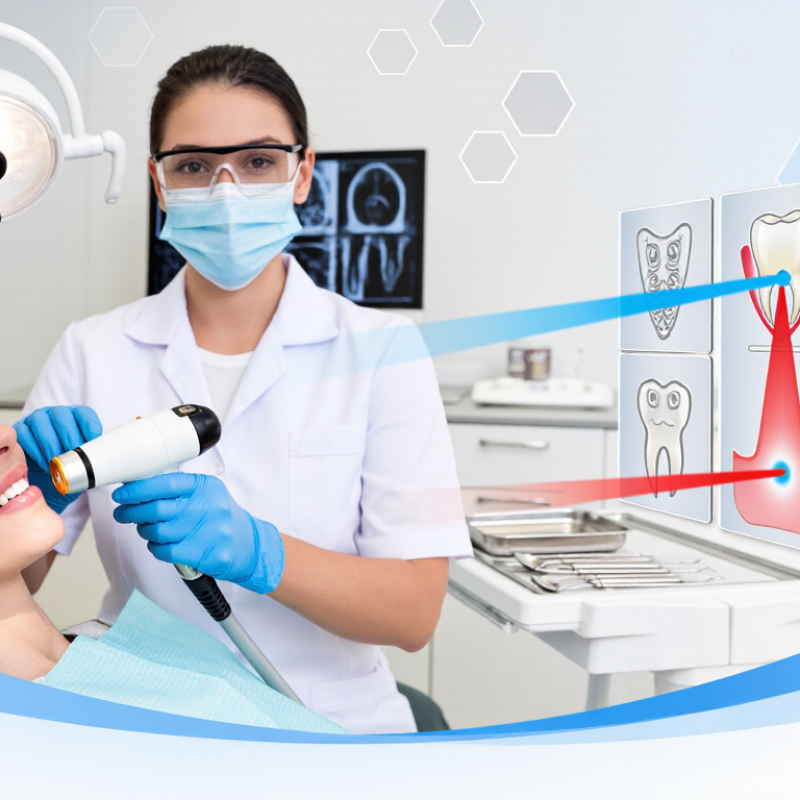
Choosing the best dental laser treatment starts with wavelength, not advertising. Diode systems commonly operate between 810 and 980 nm. Their energy is absorbed mainly by pigments, including hemoglobin and melanin. This makes them useful for soft-tissue procedures, such as gingival contouring and selected periodontal care. The fiber can feel precise around a narrow gum margin. Yet precision depends on power, pulse duration, cooling, and operator control. A wavelength alone does not guarantee gentle treatment.
Er:YAG lasers use a 2940 nm wavelength, strongly absorbed by water in enamel, dentin, and soft tissue. This interaction can support hard-tissue preparation and some soft-tissue procedures. Water spray is often used to control heat. The clinical sensation may differ from diode treatment. It can sound sharper. Patient comfort still varies. Tissue thickness, restoration material, and treatment depth require careful assessment. Evidence supports suitable case selection, but not every cavity or gum concern needs laser treatment.
Ask the dentist why a specific wavelength fits your diagnosis. A reliable consultation includes an examination, relevant radiographs, medical history, and clear alternatives. Confirm training, protective eyewear, sterile tips, and calibrated settings. These details matter. Question promises of painless, bloodless, or universally faster care. They sound attractive, but outcomes depend on diagnosis and technique. Follow-up may still require plaque control or conventional treatment. The plan should record the wavelength, settings, cooling method, and review schedule.
Choose the treatment goal first, not the newest device. Soft-tissue care, cavity removal, gum treatment, and whitening require different approaches. Ask what problem the laser will solve. Conventional treatment may be more predictable.
The dentist should explain the wavelength, procedure name, expected sensation, healing time, alternatives, and total cost. Ask whether protective eyewear is provided. Request clear emergency instructions. Details matter.
Some lasers can remove small areas of decayed tissue. They cannot replace a complete examination or restoration planning. The dentist must check the tooth, surrounding tissues, and remaining structure. I would not accept a laser promise without a full assessment.
It may support cleaning and inflammation control in selected cases. Results depend on pocket depth, bone loss, infection severity, smoking, and home care. Daily plaque control remains important. One appointment rarely fixes everything.
Many patients resume normal activities within one or two days. Tender gums, sensitivity, or mild swelling may last longer. Soft foods and gentle brushing can help. Zero recovery time sounds doubtful.
Possible risks include burns, gum recession, altered sensitivity, incomplete treatment, and infection. Risk depends on technique, training, and the treatment area. Ask who will handle complications. That question is reasonable.
Whitening gel usually performs most of the work. Light or laser activation may provide limited additional benefit. Evidence differs among systems. Ask about sensitivity, expected shade changes, and whether activation is clinically necessary.
A simple soft-tissue procedure may cost several hundred dollars. Extensive periodontal treatment can exceed several thousand dollars. Confirm whether examinations, imaging, anesthesia, and follow-up visits are included. The lowest quote may not stay lowest.
Finding effective Dental Laser Treatment Tips begins with understanding how wavelength influences treatment. Diode lasers, commonly operating between 810 and 980 nm, are generally suited to soft-tissue procedures, while Er:YAG lasers at 2940 nm can be considered for selected hard-tissue, caries-related, and periodontal applications. Your choice should reflect the treatment goal, whether it involves gum reshaping, periodontal care, cavity management, or cosmetic whitening. A qualified dental professional should explain why a specific laser is appropriate for your needs.
Before treatment, verify the provider’s credentials, regulatory clearance, and use of evidence-based protocols. Compare expected clinical results, recovery time, possible discomfort, risks, and typical costs rather than choosing based on price alone. Safety is equally important: proper protective eyewear, cooling methods, sterilization procedures, and scheduled follow-up can reduce complications and support healing. A thorough consultation and personalized treatment plan will help you make an informed decision.

 TRV Medical